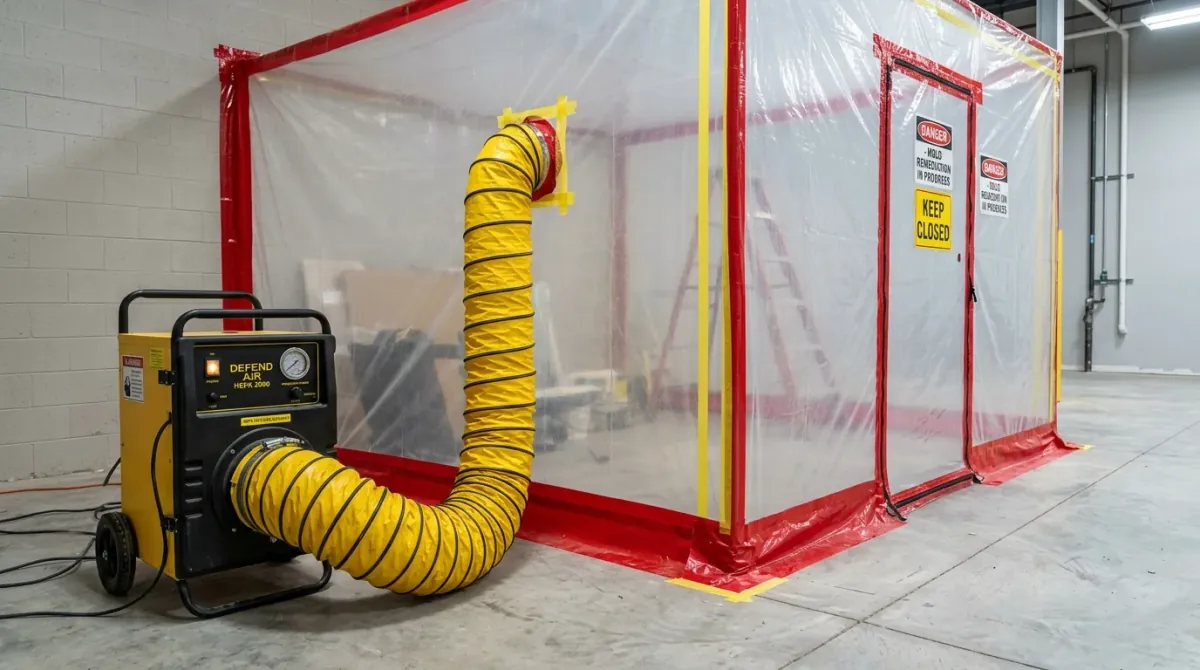
Toxic Stachybotrys chartarum eradication targeting colonies embedded in drywall, subflooring, and framing lumber under strict negative air containment.
Stachybotrys chartarum produces mycotoxins that attach to spore clusters and organic dust. Exposure causes severe respiratory irritation, headaches, and chronic coughing, particularly in homes with small children, elderly residents, or individuals with pre-existing pulmonary conditions.
Disturbing dry black mold colonies releases millions of microscopic spores into surrounding air channels. Sealed plastic polyethylene barriers and negative-pressure HEPA filtration trap spores inside the work zone, preventing cross-contamination into clean living areas.
Bleach cannot penetrate porous building materials like sheetrock, insulation, or unfinished pine framing. Bleach evaporates quickly on surfaces, leaving water behind that actually feeds the underlying mycelial roots, causing rapid regrowth within days.
Technicians cut building materials a minimum of twelve to twenty-four inches beyond the visible perimeter of mold growth. Hyphae spread invisibly through drywall core paper and framing cavities long before surface discoloration becomes apparent.
Industrial negative air machines equipped with medical-grade HEPA filters exhaust scrubbed air outside the structure continuously. This creates negative pressure that stops spores from migrating through doorways and electrical chases into unaffected rooms.
Exposed framing lumber is wire-brushed or sanded to dislodge surface colonies, vacuumed with critical-filter HEPA units, and coated with an EPA-registered antimicrobial sealant that inhibits future fungal colonization.
Most contained black mold removals require one to three days depending on square footage and structural moisture levels. Structural drying with industrial dehumidifiers must reach target wood moisture readings before final rebuilding begins.
Independent third-party air sampling and surface lift tests verify spore levels inside the containment zone match or fall below outdoor baseline spore counts before containment plastic comes down.
Schedule Black Mold Removal
Direct phone consultation assesses contamination severity, containment protocols, and rapid technician dispatch.
Stop Spore Spread Before Mold Damages Your Property
Unchecked moisture allows fungal colonies to expand behind baseboards, sheetrock, and insulation within 48 hours. Immediate structural containment prevents spore colonization throughout your indoor living space.