Trapped indoor humidity migrating past ceiling drywall condenses directly against freezing roof sheathing during cold winter months, turning attic spaces into incubation chambers for wood rot and mold. Without functional soffit airflow baffles, fungal colonies spread rapidly along rafters, plywood decking, and ceiling joists. Technicians isolate attic access points under continuous negative air pressure, bag contaminated insulation, and hand-sand affected lumber surfaces before applying white antimicrobial fungicidal coatings. Addressing improper bathroom exhaust venting and clearing roof soffits eliminates the underlying moisture driver permanently.
Remediation Procedure & Containment Measures
1
Access Isolation & Negative Air
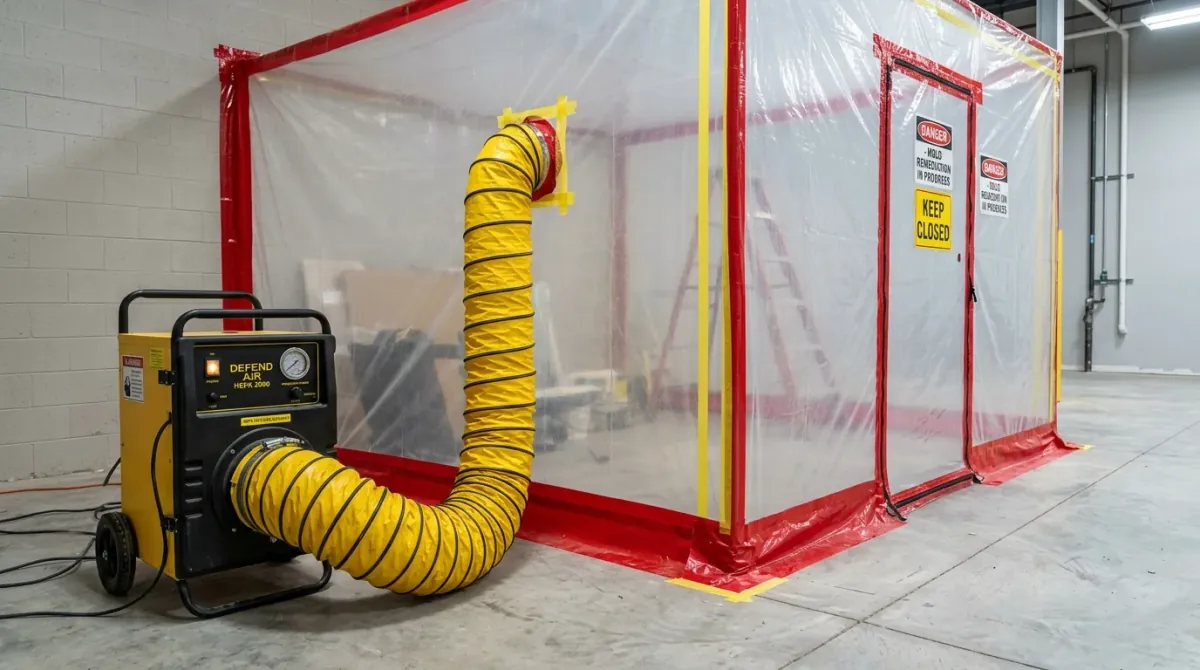
Attic hatchways are sealed inside zipper booths with negative air machines exhausting through roof vents.
2
Decking & Truss Surface Abrasion
Wood sheathing and roof trusses are mechanically wire-brushed or sanded to eradicate embedded hyphae.
3
Antimicrobial Encapsulant Coating
Lumber surfaces receive a white fungicidal encapsulant that seals stains and stops future spore growth.
4
Ventilation Path Restoration
Soffit baffles are cleared and bathroom exhaust ductwork is verified to vent directly outside.
Suspect Active Microbial Growth Behind Your Walls?
Speaking directly with our technical team allows immediate scoping of containment needs before spores circulate into HVAC returns.
Warm, humid household air leaks upward through light fixtures and unsealed ceiling bypasses, condensing against freezing roof plywood during cold weather. Without adequate soffit-to-ridge airflow, repeated winter condensation cycles rot the sheathing and trigger severe fungal blooms.
Exhaust ducts terminating inside the attic cavity instead of through the exterior roof or gable wall pump gallons of moist shower steam directly against roof decking. Rerouting all exhaust ducts through exterior vent caps is an essential remediation requirement.
Specialized low-profile HEPA vacuums and extension spray wands access narrow rafter tails. Technicians install rigid rafter baffles to maintain unimpeded ventilation channels between soffits and roof peaks before applying antimicrobial coatings.
Most structurally intact plywood and oriented strand board (OSB) can be successfully restored through abrasive sanding or dry-ice blasting combined with antimicrobial sealants. Sheathing showing advanced dry rot or structural sag requires carpenter replacement during roof work.
Technicians spray a white or clear breathable fungicidal encapsulant that chemically bonds with the lumber. This protective barrier seals remaining microscopic stains and prevents future spore adhesion in case temporary condensation occurs.
The attic access hatch is sealed inside an airtight zipper-containment booth with heavy plastic sheeting under negative pressure. Air scrubbers draw air toward the attic and exhaust out roof louvers, preventing spore fallout into bedrooms or hallways.
Adding insulation over active mold traps existing moisture and can block essential soffit vents, worsening mold conditions. Mold must be physically removed, wood moisture levels stabilized, and ventilation pathways cleared before new insulation is installed.
Typical single-family attic remediations take one to two days. Projects involving complete insulation removal, extensive wood sanding, and baffled ventilation repairs may require additional drying and re-insulation time.
Schedule Attic Mold Remediation
Direct phone consultation assesses contamination severity, containment protocols, and rapid technician dispatch.
Stop Spore Spread Before Mold Damages Your Property
Unchecked moisture allows fungal colonies to expand behind baseboards, sheetrock, and insulation within 48 hours. Immediate structural containment prevents spore colonization throughout your indoor living space.