Certified Mold Remediation & Removal Operations
Unchecked structural moisture transforms drywall and framing timber into active fungal breeding grounds within forty-eight hours. Dedicated environmental remediation teams isolate affected zones under continuous negative pressure, systematically eliminating microbial contamination while safeguarding unaffected living quarters.
Engineered Containment and Structural Remediation
Active fungal colonies thrive in hidden structural spaces following roof leaks, basement seepage, and plumbing breaks. Standard surface wiping often scatters microscopic spores throughout the HVAC system, exacerbating respiratory hazards across the entire building.
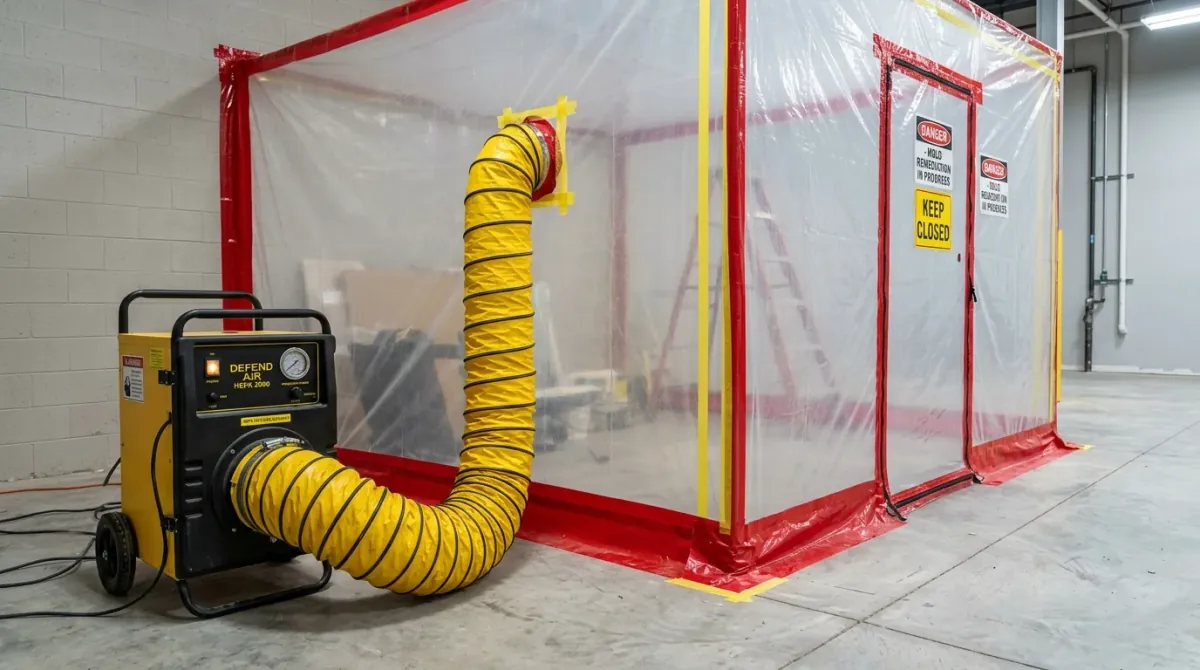
Field remediation crews operate strictly under negative-pressure engineering controls using commercial HEPA filtration units. Porous materials colonized beyond recovery are sealed and extracted inside containment, while structural framing undergoes mechanical abrasion and antimicrobial washes.
Property owners across the country rely on systematic remediation practices to restore safe indoor air quality and protect structural timber from progressive rot.
What to Expect During the Remediation Process
Direct Technical Consultation
Direct communication connects you with remediation specialists who assess moisture intrusion symptoms, evaluate contamination boundaries, and organize rapid response.
Strict Containment Setup
Polyethylene isolation barriers and zipper airlocks seal off the work zone completely before physical demolition or surface abrasion begins.
Documented Moisture Control
Commercial desiccant dehumidifiers run until structural timber reaches target moisture levels below sixteen percent, preventing recurrent microbial growth.
Stop Spore Spread Before Mold Damages Your Property
Unchecked moisture allows fungal colonies to expand behind baseboards, sheetrock, and insulation within 48 hours. Immediate structural containment prevents spore colonization throughout your indoor living space.