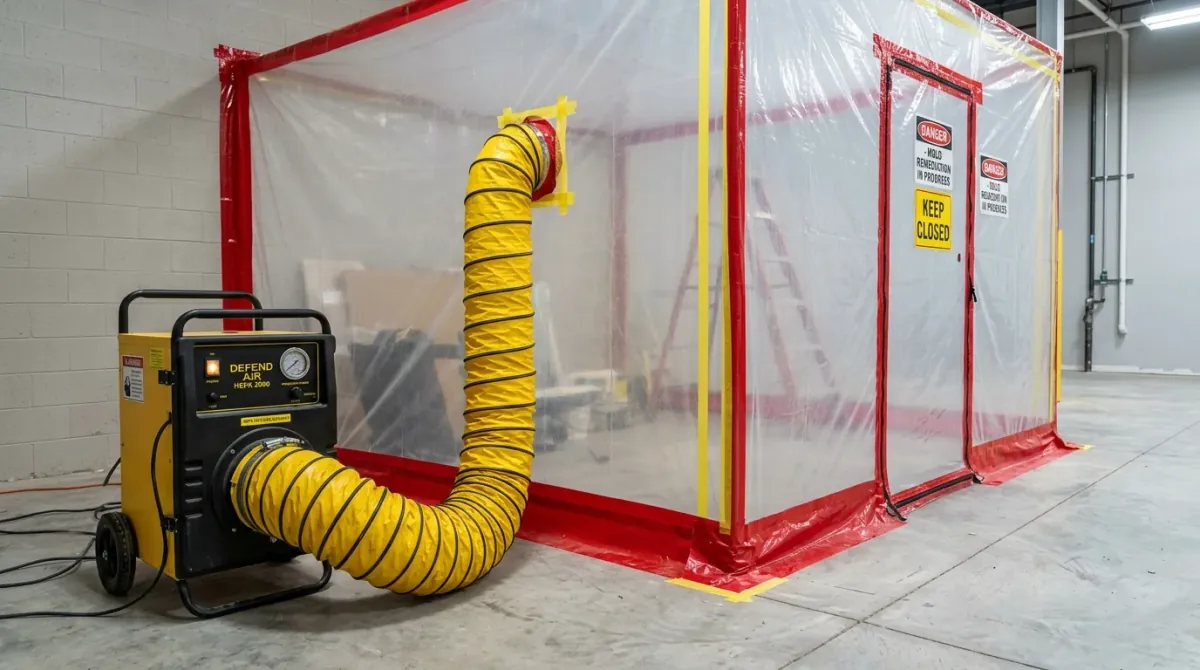
Protocol Overview: Basement & Crawl Space Mold Remediation
Porous foundation concrete and exposed dirt crawl space floors generate constant capillary moisture rise that elevates lower-level relative humidity above sixty percent. Fungal colonies quickly spread across floor joists, subflooring, and fiberglass insulation batts, sending musty microbial odors into occupied living areas above. The remediation process involves removing saturated insulation, wire-brushing joist framing, applying deep-penetrating fungicidal washes, and installing twenty-mil reinforced vapor barriers across crawl space floors. Running industrial desiccant dehumidifiers pulls deep structural moisture out of foundation timbers, ensuring long-term prevention against recurrent fungal blooms.
Remediation Procedure & Containment Measures
1
Moisture Source Diagnostics
Calibrated moisture meters map moisture migration through foundation concrete and rim joists.
2
Saturated Insulation Disposal
Contaminated fiberglass batts and damp organic debris are removed inside sealed plastic containment.
Frequently Asked Questions: Basement & Crawl Space Mold Remediation
Ground moisture continuously migrates through porous foundation concrete and damp soil floors, driving relative humidity above sixty percent. Fungal spores naturally settle on cellulose paper backings, floor joists, and subflooring where high humidity fuels exponential colony growth.
Encapsulation seals the dirt floor and masonry walls with a thick, puncture-resistant 12-to-20-mil reinforced vapor barrier. Taping seams and conditioning the space isolates soil moisture from wooden floor framing permanently.
The stack effect in residential homes naturally draws warm air upward toward the attic, pulling up to fifty percent of first-floor indoor air directly from the basement or crawl space. Airborne fungal spores and musty microbial volatile organic compounds rise directly into living areas.
Saturated or mold-colonized fiberglass insulation cannot be restored and must be bagged inside containment and discarded. Porous glass fibers trap spore clusters and moisture, creating perpetual odor problems even after surrounding framing dries.
Wood moisture content must drop below sixteen percent—ideally twelve to fourteen percent—using commercial desiccant dehumidifiers. Timber maintained below sixteen percent moisture content naturally prevents mold spores from germinating.
Active groundwater seepage must be controlled using perimeter interior drain tile and a reliable sump pump system alongside encapsulation. Standing water under vapor barriers creates hydraulic pressure that eventually compromises floor seals.
Technicians use HEPA contact vacuuming followed by mechanical wire brushing or abrasive media blasting. The exposed lumber is then treated with an EPA-registered fungicidal wash and sealed with a moisture-resistant antimicrobial coating.
Negative-pressure ducting routes contaminated air outside through crawl space vents or basement egress windows, preventing mold spores from leaking into interior living rooms during physical agitation.
Schedule Basement & Crawl Space Mold Remediation
Direct phone consultation assesses contamination severity, containment protocols, and rapid technician dispatch.
Stop Spore Spread Before Mold Damages Your Property
Unchecked moisture allows fungal colonies to expand behind baseboards, sheetrock, and insulation within 48 hours. Immediate structural containment prevents spore colonization throughout your indoor living space.